







Gaming Chair for Big and Tall Users: Frame, Capacity, and Seat Width Explained
Shopping for a gaming chair when you're bigger, taller, or both is a genuinely different exercise than it is for the average buyer. The spec sheets look the same, the marketing language is reassuringly bold, and half the product pages will tell you a chair "fits users up to 6'5" and 300 lbs" without explaining what that actually means for your hip width, your lumbar curve, or whether the gas piston will hold its height after six months of daily use. The result? A lot of large-frame gamers end up in chairs that compress their hips, fail to support their upper back, or quietly degrade under loads they were never truly engineered to handle.
This guide cuts through the noise. We'll break down what frame construction, weight capacity ratings, and seat width measurements actually tell you about a chair's suitability for big and tall users — and where most chairs quietly cut corners. Whether you're 6'3" and 220 lbs or 5'11" and 280 lbs, the same structural principles apply, and knowing them will help you make a decision you won't regret six months from now.
Why Standard Gaming Chairs Fall Short for Big and Tall Users
Most gaming chairs on the market are designed around a fairly narrow slice of the adult population. Ergonomic standards like BIFMA G1 and ISO 9241-5 define recommended furniture dimensions using anthropometric data spanning roughly the 5th to 95th percentile of adults — but the mass-market gaming chair industry tends to cluster around the middle of that range. The result is a product landscape where genuinely large-occupant chairs are a small minority, even as brands slap "XL" labels on seats that are only marginally wider than their standard models.
The problems this creates for big and tall users are specific and consistent. For tall gamers, standard backrests often terminate too low, leaving the upper thoracic spine and shoulders without support and creating the forward head posture that contributes to neck tension and fatigue during long sessions. For wider users, the issue is usually hip compression: aggressive side bolsters that are meant to cradle you instead pinch the outer thighs and restrict blood flow, especially after the first hour of play. The chair may look like it fits, but the pressure points tell a different story. Understanding the three structural pillars — frame, capacity, and seat geometry — is the fastest way to filter out chairs that will let you down.
Frame and Base Materials: What Actually Holds You Up
The internal frame of a gaming chair is its skeleton, and for big and tall users it's the single most important structural variable. A well-engineered frame distributes the user's weight evenly across the chair's geometry, reducing stress on individual joints and preventing the premature flex and creak that are the first signs of structural fatigue. For larger users, this engineering margin matters far more than it does for someone sitting well within the standard weight range.
Steel frames are the most common choice in mid-range and premium gaming chairs. Steel is strong, capable of supporting significant weight, and has a long lifespan under cyclical loading. The trade-off is mass — a steel-framed chair is heavier and harder to move. Aluminum alloy frames, found in higher-tier products, offer an excellent strength-to-weight ratio along with natural corrosion resistance. High-grade aluminum alloy bases maintain their shape well under dynamic loads — the sudden leans and positional shifts that occur during intense gameplay — which is where plastic or nylon bases consistently fail larger users over time.
The five-star base material deserves equal attention. Nylon bases may pass basic BIFMA certification tests, but under consistent heavy loading they are vulnerable to gradual deformation — an effect sometimes called "cold flow" — that manifests as wobble and instability over months of use. Aluminum and steel bases offer meaningfully higher rigidity and resist that flexing under load. For big and tall gamers specifically, a metal five-star base is not a luxury feature; it is a structural requirement for long-term stability.
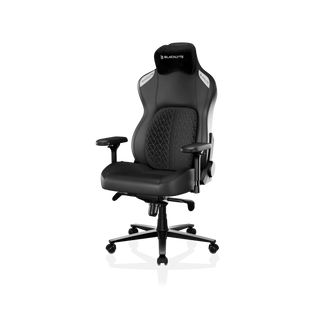
Blacklyte's chair lineup reflects these material choices deliberately. The entry-level Athena gaming chair, premium Kraken Pro and flagship Athena Pro all use aluminum alloy bases — a meaningful structural upgrade that directly benefits users at the higher end of the weight and height range. All three models are built around a reinforced internal frame designed to handle the dynamic loads of extended gaming and work sessions, not just the static weight of someone sitting still.
Weight Capacity: Reading Past the Marketing Number
Weight capacity is usually the first number big and tall buyers look at, and it's also the most frequently misread. Many chairs advertise high static load ratings — the weight they can hold with a perfectly still occupant — without disclosing their fatigue-tested dynamic capacity, which accounts for the real forces generated by leaning, reclining, and shifting positions during use. Gaming generates these dynamic forces constantly. A rapid lean during a clutch moment, a sudden recline between rounds — these movements apply loads that can meaningfully exceed a user's static body weight, and a chair rated only to that static number may not have the structural margin to handle them reliably over time.
A practical rule of thumb used by ergonomists is to choose a chair whose rated capacity is at least 20–30% higher than your actual body weight. This buffer accounts for dynamic loading and provides meaningful protection against premature component wear — particularly in the gas piston and base. The gas piston is a component that often gets overlooked in the weight capacity conversation. A Class 4 hydraulic gas piston is the appropriate specification for any chair being used by a larger user or in daily heavy-use conditions. Compared to the Class 3 pistons found in budget and entry-level chairs, a Class 4 unit delivers greater durability under repeated loading cycles and maintains consistent seat height over a longer service life — two things that matter considerably when a chair is being used near the upper end of its rated range.
All three Blacklyte gaming chairs — the Kraken Pro, Athena Pro, and Athena — are equipped with Class 4 hydraulic gas pistons as standard. This is not a flagship-only specification at Blacklyte; it's a baseline requirement across the full lineup, reflecting the brand's commitment to structural integrity regardless of price tier.
Seat Width: The Most Overlooked Spec in Chair Shopping
If weight capacity is the first number people check, seat width is the first they overlook — and for users with a wider build, it's often the spec that determines whether a chair is actually comfortable or just theoretically adequate. The challenge is that advertised seat width figures can be misleading. Most gaming chairs feature side bolsters that rise from the seat pan, and the "total" seat width measurement includes those bolsters. The usable flat width — the flat area between the bolsters where your hips and thighs actually rest — is frequently two to four inches narrower than the headline number.
A practical measurement method recommended by ergonomists: sit on a firm surface, have someone measure the distance across the widest part of your hips or thighs, then add four to six inches to that number. That result is your target usable seat width and also your minimum recommended inter-armrest distance. A chair that is too narrow will compress the outer thighs, restrict blood circulation, and force an uncomfortable splayed posture. A chair that is marginally wide enough on paper may still feel restrictive if deep bolsters cut into the figure. When comparing chairs, always check whether the manufacturer specifies both the total seat width and the usable flat width — and be skeptical of brands that only publish one figure.
Foam construction is part of the seat width story too. A seat cushion made from low-density foam will compress and spread under heavier users, narrowing the functional sitting area and losing its shape over months of use. Blacklyte uses high-density cold-cure foam across all chair models — ranging from 45–60 kg/m³ depending on the series — which resists compression and maintains its support geometry over time. The flagship Athena Pro goes a step further with a memory foam over contour-foam construction, infused with bamboo charcoal and silver ions, providing pressure-adaptive comfort while keeping the seat geometry stable under load. The Athena and Kraken Pro use contour foam seats engineered to hold their shape through extended daily use.
You can use Blacklyte's chair comparison tool to review precise seat dimensions across models side by side before making a decision.
Backrest Height and Lumbar Support for Taller Frames
Tall users have a straightforward but often unmet requirement: the backrest needs to be long enough to support the upper thoracic spine and reach toward the base of the skull. When a backrest terminates too low for the user's torso length, the upper back and shoulders are left unsupported, which progressively shifts posture into the "shoulder hunch" pattern — a contributor to neck tension, upper back fatigue, and the kind of chronic discomfort that gamers often attribute to "sitting too long" rather than to a fundamentally mis-sized chair. For users above 6'2", this is one of the most common fit failures in standard-sized gaming chairs.
Lumbar support positioning compounds this issue. Standard lumbar support is typically placed to target the L4–L5 vertebrae of an average-height user. For a taller person, that support often ends up hitting the sacrum or the very base of the lumbar curve instead, failing to provide the inward pressure that maintains the spine's natural S-shape. This is why adjustable lumbar systems — ideally adjustable both in height and in fore-aft depth — are a material functional requirement for tall users, not a marketing add-on.
Blacklyte's three current chairs approach lumbar support differently by tier. The Athena includes an external lumbar pillow, which gives flexibility to position support wherever your anatomy requires. The Kraken Pro features a built-in floating lumbar system with front-to-back fine adjustment and a lock, allowing users to dial in the depth of support precisely. The flagship Athena Pro takes this furthest with a built-in 4-way adjustable lumbar that moves both up and down as well as forward and back — making it the most accommodating option for tall users who need to precisely match lumbar support to their individual spinal geometry. All three models recline through a 90°–149° range with a frog-type tilt mechanism and adjustable tilt tension, giving big and tall users full control over their recline without sacrificing structural stability.
Armrests: Why 4D Adjustability Is Non-Negotiable
Armrests play a larger role in big and tall comfort than most buyers anticipate. For wider users, armrests that are too narrow force the arms inward and put lateral pressure on the hips and outer thighs. For tall users, armrests set too low cause the shoulders to drop and the neck to compensate — a pattern that accelerates fatigue during long sessions. The OSHA guidelines for computer workstation ergonomics specify that armrests should allow the user to sit with shoulders relaxed and elbows at approximately 90–100°, with forearms roughly parallel to the floor.
Meeting that standard across the full range of big and tall body types requires armrests that adjust in multiple axes. Height adjustment gets the elbows to the right elevation. Width adjustment gives wider-shouldered users the clearance they need without forcing arms against the hips. Depth and pivot adjustment allow fine-tuning that aligns the forearm support to actual desk and keyboard position. Blacklyte equips all three of its current chair models with 4D armrests — adjustable in height, width, depth, and angle — across the full lineup, not reserved for higher tiers. This is a meaningful advantage for users who are shopping on ergonomic need rather than feature tiers.
How Blacklyte's Chair Lineup Is Built for Bigger Builds
Blacklyte has spent two decades engineering gaming furniture for performance under sustained use — the kind of daily, multi-hour sessions that expose structural weaknesses quickly. With over 200,000 gamers across 50+ Countries & Regions and 20+ global esports partnerships including tournament organizer BLAST, Team Liquid, and Fnatic, the brand's engineering decisions are shaped by real-world use at the highest levels of competitive play. That context matters when you're a big or tall user evaluating whether a chair's claimed specifications will hold up in practice.
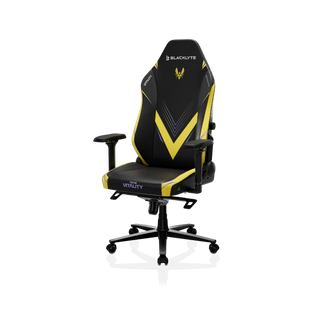
The Blacklyte gaming chair lineup currently spans three models structured around different use cases and body types. The Athena is the entry point — built with an aluminium alloy base, contour foam seat, 4D armrests, and an external lumbar pillow, covering the core structural requirements for larger users at an accessible price without compromising on the Class 4 hydraulic gas piston and high-density foam that make the difference in long-term durability. The Kraken Pro moves into the premium tier with an aluminum alloy base, built-in floating lumbar with front-back adjustment, and DuraGen™ Leatherette upholstery engineered for durability and easy maintenance. As for Athena Pro, Blacklyte's flagship, which adds the memory foam over contour-foam seat construction, a built-in 4-way adjustable lumbar, FlexKnit™ Fabric and DuraGen™ Leatherette upholstery, and an aluminum alloy base — the most complete ergonomic package in the lineup and the strongest fit for users who want maximum adjustability across every dimension.
All Blacklyte chairs ship with fast free delivery, a 30-day return window, and warranties extendable up to 5 years. If you're deciding between models based on your specific dimensions and needs, the chair comparison page lays out all key specifications side by side. You can also explore the full range on the all products page, or visit the Gaming Hub for broader guidance on setting up an ergonomic gaming space. For workspace-focused guidance, the Ergonomics page covers posture principles that apply whether you're gaming or working long hours.
Big and Tall Gaming Chair Buying Checklist
Before you commit to any chair, run through these structural and dimensional checkpoints. Labels like "XL" and "Heavy Duty" are not standardized across the industry — measurements are the only reliable reference point.
- Frame material: Look for a steel or aluminum alloy internal frame. Avoid chairs where the frame material is not disclosed.
- Five-star base: Aluminum alloy or steel. Nylon bases may be certified but are more prone to flex and deformation under sustained heavy loading.
- Gas piston class: Confirm a Class 4 hydraulic gas piston. This is the appropriate standard for regular use, especially near the upper end of a chair's weight rating.
- Weight capacity margin: Choose a chair rated at least 20–30% above your actual body weight to account for dynamic loading during use.
- Usable seat width: Measure your seated hip width and add at least 4–6 inches. Check whether the spec sheet provides the usable flat width, not just the total width including bolsters.
- Backrest height: For users above 6'1", confirm the backrest reaches the upper back and includes an adjustable or repositionable lumbar zone.
- Lumbar adjustability: Built-in lumbar with fore-aft adjustment is preferable; 4-way adjustment (height and depth) is ideal for tall users.
- Armrest range: 4D armrests (height, width, depth, pivot) give big and tall users the range needed to achieve a neutral shoulder position.
- Foam density: High-density cold-cure foam resists compression and shape loss over time; ask for the kg/m³ specification rather than relying on descriptive claims.
- Recline range and tilt tension: Adjustable tilt tension is important for heavier users who need to modulate resistance to match their weight distribution.
Finding a gaming chair that genuinely fits a bigger or taller body comes down to understanding what the specifications actually mean — not what the marketing language wants you to believe. Frame material, base construction, Class 4 hydraulic gas piston specification, usable seat width, backrest height, and lumbar adjustability are the real variables that separate a chair that will support you well for years from one that will quietly fail you in the first few months. The good news is that once you know what to look for, the checklist is straightforward, and the chairs that meet it stand out clearly from those that don't.
Blacklyte's Kraken Pro, Athena Pro, and Athena are each built to meet these structural requirements at their respective tiers — with Class 4 hydraulic gas pistons, high-density cold-cure foam, 4D armrests, and proper metal base construction across the full lineup. Explore the full gaming chair collection or use the chair comparison tool to match your measurements to the right model.
Not Sure Which Chair Fits Your Frame?
Our team can help you match the right Blacklyte chair to your height, weight, and seating needs. Reach out and we'll point you in the right direction.
Contact Us


