








Standing Desk Benefits: What the Research Actually Supports
Standing desks have moved from a niche office trend to a common choice for Australian home offices and workplaces — and the marketing claims have kept pace. Burn more calories. Eliminate back pain. Live longer. The promises are bold, and they've convinced millions of people to swap their fixed-height desks for height-adjustable alternatives. But what does the actual science say?
The honest answer is: more than skeptics admit, but less than some brands claim. A growing body of peer-reviewed research confirms several meaningful benefits of standing desk use — particularly when it comes to reducing sedentary behavior, easing lower back discomfort, and supporting better metabolic markers throughout the workday. At the same time, some of the more sweeping claims don't yet have the clinical evidence to back them up.
This article breaks down the standing desk benefits that research genuinely supports, separates fact from marketing noise, and shows Australian home-office workers, gamers, and hybrid workers how to structure desk time to actually capture those benefits — whether you're working from home, gaming, or doing both
The Hype vs. The Evidence
The standing desk market exploded alongside broader awareness of what researchers have called "sitting disease" — the cluster of health risks associated with prolonged, uninterrupted sedentary time. Studies linking excessive sitting to increased risk of cardiovascular disease, type 2 diabetes, and all-cause mortality gave rise to a simple narrative: sitting is the new smoking, and standing is the cure. The reality is considerably more nuanced.
Standing desks are not a substitute for physical activity, and simply swapping a seated posture for a standing one all day isn't inherently healthy either. Prolonged standing has its own risks, including lower limb fatigue, varicose veins, and musculoskeletal strain. What the research consistently points toward is the value of postural variety and regular movement — and that's exactly where a quality height-adjustable desk earns its keep. The ability to transition fluidly between sitting and standing throughout the day is the actual mechanism behind most of the documented benefits.
What the Research Actually Supports
Reduced Sedentary Time
This is probably the most robustly supported benefit, and it's foundational to everything else. A 2018 Cochrane Review — one of the most rigorous forms of systematic evidence synthesis — found that sit-stand desks reduced sitting time at work by approximately 30 minutes to two hours per day. That might not sound revolutionary, but the cumulative effect across a working week adds up, and breaking up continuous sitting is associated with measurable improvements in cardiometabolic health markers. Simply having the option to stand lowers the barrier to actually doing it, which matters in practice as much as in theory.
Lower Back Pain and Discomfort Relief
Lower back pain is one of the most commonly cited reasons Australian workers invest in a standing desk, and the research here is encouraging — though not without caveats. Multiple controlled trials, including a well-cited study published in BMJ Open, found that sit-stand desk users reported meaningful reductions in upper back, shoulder, and lower back discomfort compared to those using standard seated desks. In some studies, participants reported a 50% or greater reduction in back and neck pain after several weeks of alternating between sitting and standing.
The important caveat is that these benefits are largely tied to alternating positions rather than standing continuously. Standing for hours in a fixed posture can actually increase lower back strain — which is why ergonomic setup matters enormously. Desk height, monitor placement, foot positioning, and the quality of your seating when you do sit all interact to determine whether you're actually protecting your spine or just trading one strain pattern for another. If you're pairing your standing desk with a chair, it's worth exploring the ergonomics resources at Blacklyte's ergonomics hub to understand how sit-stand routines and proper seating work together.
Blood Sugar and Cardiovascular Markers
Some of the most compelling research involves metabolic response. A study published in Diabetes Care found that alternating between sitting and standing every 30 minutes reduced post-lunch blood glucose spikes by around 11% compared to uninterrupted sitting. Separate research has suggested improvements in insulin sensitivity and reductions in cardiovascular risk markers among people who regularly break up sedentary time with standing or light activity. These findings are consistent with broader epidemiological data showing that reducing prolonged sitting — independent of total exercise — has positive effects on metabolic health. This doesn't mean a standing desk replaces exercise, but it suggests that what you do during the 8-10 hours you're at a desk matters for your health even when you're not "working out."
Mood, Energy, and Focus
Self-reported outcomes in standing desk studies tend to be positive when it comes to alertness, mood, and subjective energy levels. A 2016 study published in the British Journal of Sports Medicine tracked office workers over seven weeks and found significant improvements in energy, mood, and focus among those who used sit-stand desks, alongside reductions in fatigue and anxiety. The effect sizes here are modest and harder to quantify than physiological markers, but they're consistent across multiple studies and align with what many standing desk users report anecdotally. For people whose workday doubles as a gaming session — a common setup for hybrid work and home offices — where mental clarity and reaction sharpness matter, these self-reported improvements in sustained focus are worth taking seriously. You can dig deeper into this intersection of ergonomics and performance at the Blacklyte Gaming Hub.
What the Research Doesn't Fully Support (Yet)
Honesty is part of good ergonomics advice. A few standing desk claims circulate widely but aren't yet supported by strong, replicated evidence:
- Significant calorie burn: Standing burns more calories than sitting — technically true, but the difference is marginal. Research estimates roughly 8–10 additional calories per hour while standing, which over a full workday amounts to less than a small snack. Claims that standing desks drive meaningful weight loss are not supported by the evidence.
- Direct lifespan extension: The link between reduced sedentary time and longevity exists in population-level data, but attributing that to standing desk use specifically involves too many confounders to draw a straight line.
- Productivity gains: Studies on cognitive performance and standing desks are mixed. Some find improvements in focus and engagement; others find no difference or even slight decrements for tasks requiring sustained concentration. The verdict here is genuinely inconclusive.
None of this means a standing desk isn't worthwhile — the evidence for reduced sedentary behavior, back pain relief, and metabolic benefits is real. It just means the conversation benefits from accuracy, and the strongest case for a sit-stand desk is built on what the science actually shows rather than overreaching claims.
The Real Key: Movement, Not Just Standing
If there's one takeaway that threads through nearly all the research, it's this: the goal is postural variation and regular movement breaks, not simply replacing sitting with standing. Researchers increasingly frame the problem as one of interruption frequency — how often you break prolonged static postures — rather than the total amount of standing time. Brief movement breaks every 30–45 minutes, standing periods interspersed throughout the day, and transitions between postures are all associated with better outcomes than either all-day sitting or all-day standing.
This is why the quality and reliability of a desk's lift mechanism matters as much as the surface you work on. A desk that's smooth, near-silent, and programmable with height memory makes transitioning feel effortless — which means you actually do it. A desk that's noisy, slow, or imprecise becomes a friction point that discourages the regular transitions that make the whole system work. When the transition costs you nothing, the habit sticks.
How to Get the Most From a Standing Desk
Getting real benefits from a sit-stand desk depends on how you use it, not just that you own one. The following guidelines reflect both the research evidence and practical ergonomic principles:
- Follow the 30/30 or 45/15 rule: Stand for 30 minutes per hour, or alternate every 45 minutes seated with 15 minutes standing. Adjust based on comfort and task demands.
- Set your desk height correctly: When standing, elbows should be at roughly 90 degrees, wrists neutral, and monitor at or slightly below eye level. Incorrect height positioning negates many of the ergonomic benefits.
- Use an anti-fatigue mat: Standing on a hard floor for extended periods increases leg fatigue significantly. An ergonomic anti-fatigue mat reduces strain and makes longer standing periods more sustainable.
- Don't neglect your seated setup: The time you spend seated still matters. A quality ergonomic chair with adjustable lumbar support, seat height, and armrest positioning protects your spine during sitting periods.
- Use programmable height presets: Desks with memory presets remove the friction from transitioning. If switching height takes 30 seconds and one button press, you'll do it. If it requires manual adjustment, you probably won't.
Choosing the Right Desk for Your Setup
Not all height-adjustable desks are built equally, and the specifications that matter most for Australian home offices and workspaces — motor quality, lift range, stability at standing height, and surface utility — vary considerably across the market. For a detailed breakdown of what to look for before buying, the Blacklyte desk comparison page lays out the key parameters side by side.
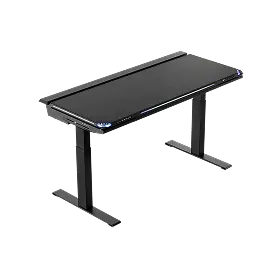
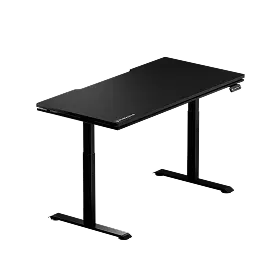
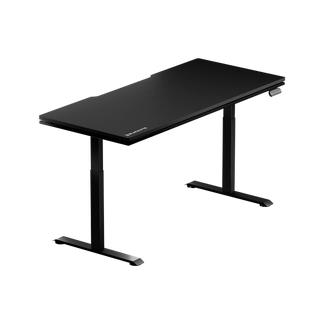
For Australian home offices and gaming setups, Blacklyte's Atlas Desk and Atlas Lite Standing Desk are engineered for exactly this kind of active, transition-oriented use — with programmable height memory, integrated cable management, magnetic surfaces, and smart lighting controls through the Atlas Driver software. These aren't just desks; they're command centers designed for workspaces where performance and ergonomic discipline matter in equal measure. Whether you're building a dedicated workstation or a dual-purpose gaming and productivity setup, the full standing desk lineup is worth a close look.
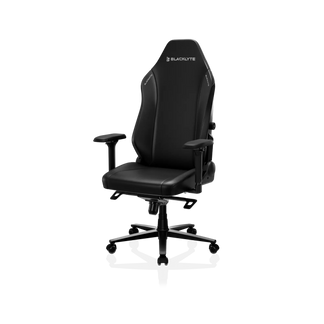
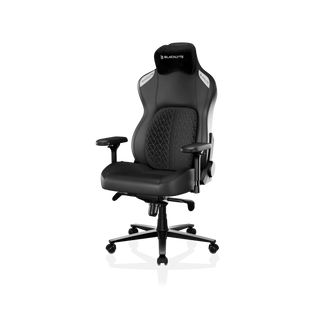
And because the evidence makes clear that seating quality during sit periods is just as important as the desk itself, pairing your setup with a properly specified ergonomic chair completes the picture. Explore the full gaming chair collection or compare models directly on the chair comparison page to find the right match for your frame and workflow.
The research on standing desks tells a clear but measured story. Yes, they genuinely help reduce sedentary time, ease lower back discomfort, support healthier blood sugar responses, and improve self-reported energy and mood. No, they're not a calorie-burning miracle or a shortcut to longevity. The real mechanism is simpler and more actionable than any headline: regular postural variation beats prolonged static posture in either direction.
For Australian home offices and workspaces, a quality sit-stand desk — used with intention and paired with proper ergonomic setup — can be a practical investment in long-term comfort and performance at a desk. The key is building a setup that makes healthy transitions effortless, so the habit becomes automatic rather than aspirational. When the desk does the work, you reap the benefits.
Ready to build a workspace that actually works for your body?
Explore Blacklyte's full range of height-adjustable standing desks, ergonomic gaming chairs, and accessories — all engineered to support the way you sit, stand, and perform. Have questions about which setup is right for you? Contact us and our team will help you dial it in.


